Parts have to come to our facility. All scanning and measurement is done in-house in Waxhaw, NC. Ship the part to us, or arrange a local hand-off if you are in the Charlotte area. On-site and mobile scanning at your location is not offered at this time.
Reverse engineering is not copying. It is understanding the part well enough to rebuild it correctly.
Anyone with a scanner can produce a mesh that looks like your part. That mesh is a snapshot of one worn, cracked, twenty-year-old component, including the wear and the crack. Print it and you have manufactured the same failure.
What we do instead is digitize the part, verify the dimensions that actually matter with hand metrology, and rebuild it as a parametric CAD model at nominal geometry. You get a part that fits, a model that can be modified, and an honest answer about whether a printed replacement is the right call at all.
Based in Waxhaw, serving Charlotte and the Carolinas, and working by RFQ anywhere in the country.
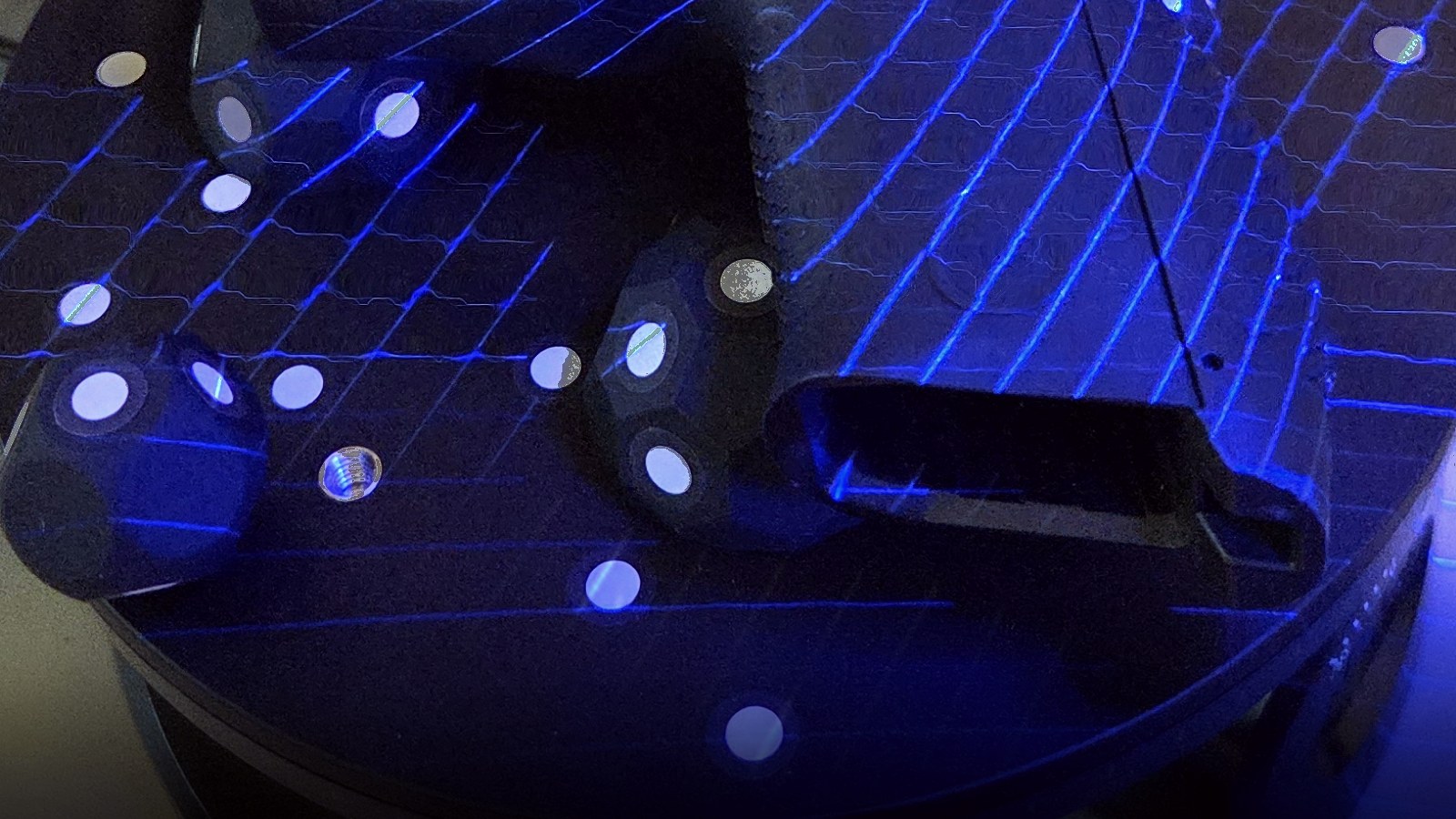
What the work is actually done on.
Four pieces of equipment do the whole job. Here is what each one is, and what it is for.
Revopoint MetroX Pro 3D Scanner
A handheld blue-laser and full-field structured-light scanner. Four capture modes, so a small dense part and a large flat panel get the right treatment instead of the same compromise. Cross-line and parallel-line laser for geometry and shiny surfaces, structured light for speed and color, turntable mode for small parts that need full coverage.
- Modes
- Cross laser, parallel laser, structured light, turntable
- Accuracy
- Up to 0.02 mm single frame
- Precision
- Up to 0.01 mm single frame
- Volumetric
- 0.02 mm + 0.04 mm × L(m)
- Fixturing
- Dual-axis turntable, marker kit, calibration board
Digital calipers and micrometers
The scan gives shape. Hand metrology gives the numbers that decide whether the part fits: bore diameters, bolt-hole spacing, shaft clearances, wall thickness. Every critical dimension on a reverse-engineered part is measured directly and checked against the model, never read off a mesh and hoped for.
- Used for
- Critical dimensions, fits, first-article verification
- Applied to
- Bores, hole patterns, thickness, shaft and pin fits
Onshape parametric CAD
Scan data is rebuilt as a feature-based solid model with real datums, real hole patterns and real radii. That is the difference between a copy of a worn part and a part you can change. Need it 3 mm thicker, or with a different bolt circle, or in a stronger material next year? The model supports it.
- Delivered
- STEP, STL, 3MF, PDF drawing
- Editable
- Yes, fully parametric
- Ownership
- Model is yours on a scan-to-CAD job
Bambu Lab H2D and P1S
Production side, and the only optional step on this page. Two machines, so a run is not hostage to one printer. Engineering thermoplastics only for functional work: PA-CF and PET-CF for stiff structural parts, PC-Blend for impact, ASA for outdoor and UV, TPU where the part has to flex, seal or grip. If you would rather take the model or a drawing and make the part elsewhere, that is a normal way to finish a job here.
- Build volume
- 350 × 320 × 325 mm (13.8 × 12.6 × 12.8 in)
- Tolerance
- ±0.008 in (0.2 mm) standard
- Materials
- 9 qualified engineering grades
Worth knowing: the scanner resolves roughly ten times finer than the printer can hold. Scanning is not the limiting factor on a printed replacement part; the process is. What the scanner buys you is confidence that the geometry is right before anything is committed to a machine, and a model good enough to hand to a machine shop if the answer turns out to be metal.
Part in, part out. Five steps.
Typical turnaround is 7 to 21 days depending on how much reconstruction the part needs. You will know which end of that range you are on before you approve anything.
Intake and go / no-go
Send the part, or photos and a description if you cannot let it go yet. The part itself has to reach us in Waxhaw before any scanning happens, by mail or by local hand-off. Tell us what it does, what it bolts to, and what killed it. Before any money changes hands you get a straight answer on whether a printed replacement is realistic. If it is not, you get told that and pointed somewhere useful, which costs you a phone call instead of three weeks.
Output: go / no-go and a quoteCapture
The part gets scanned in whichever mode suits it: laser for shiny or dark surfaces, structured light for speed, turntable for small parts needing full 360 coverage, markers for larger geometry that has to stitch together accurately. Glossy, black or transparent parts need a light removable scanning spray first, and you will be told before quoting if yours does.
Output: point cloud and reference meshReconstruct to nominal
This is the step that separates real reverse engineering from mesh-and-print. The scan becomes a reference underlay, not the deliverable. Around it we build a parametric solid: true datums, real hole patterns, clean radii, symmetric features made symmetric again. Wear gets removed. Broken geometry gets reconstructed from the surviving side. What you end up with is the part as designed, not the part as destroyed.
Output: parametric STEP modelFirst article
One part, printed in the intended material, dimensionally checked against the original and against the model. On a local job you are welcome to test-fit it yourself before we run anything else. If the fit needs adjusting, that is a parameter change and a reprint, not a redesign.
Output: one verified part, fit confirmedHand over
Take whichever of the three deliverables you actually need. If that includes parts, batch runs come with locked process parameters, consistent material lots and dimensional spot-checks. Whatever you take, the component stops being a one-off problem: next time it fails you are ordering a known quantity instead of starting over.
Output: parts, model, drawing, or any combination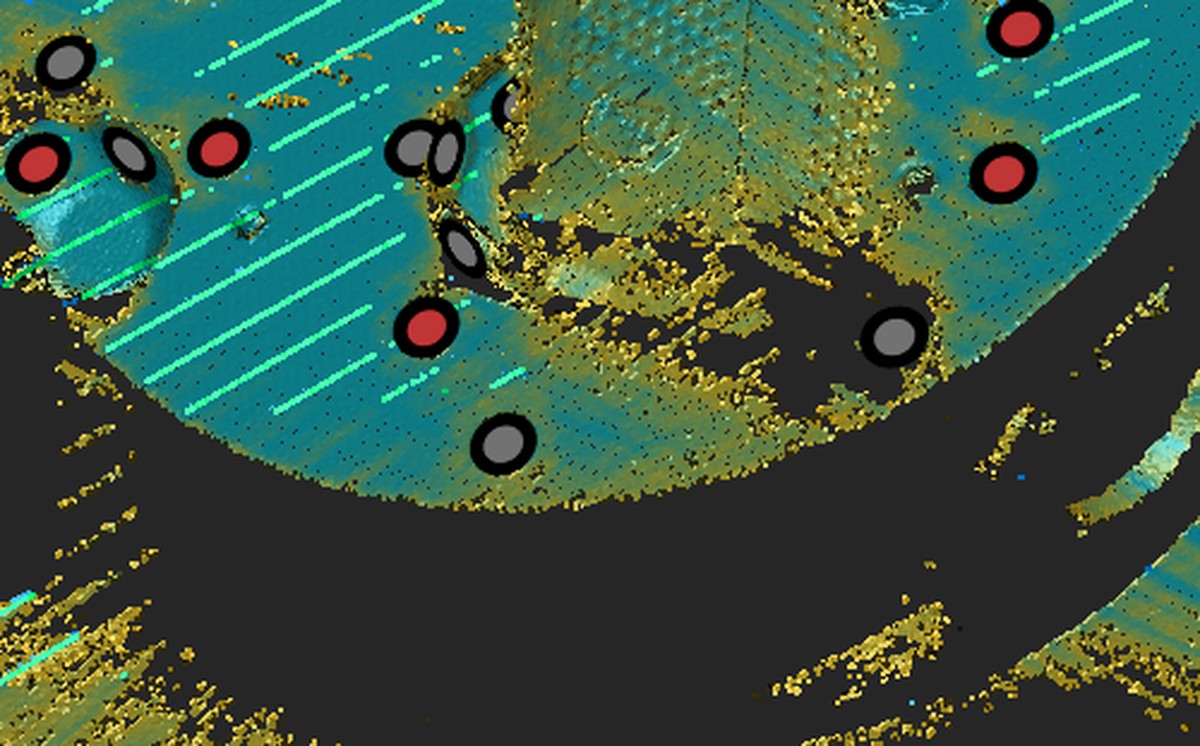
You don’t have to buy parts.
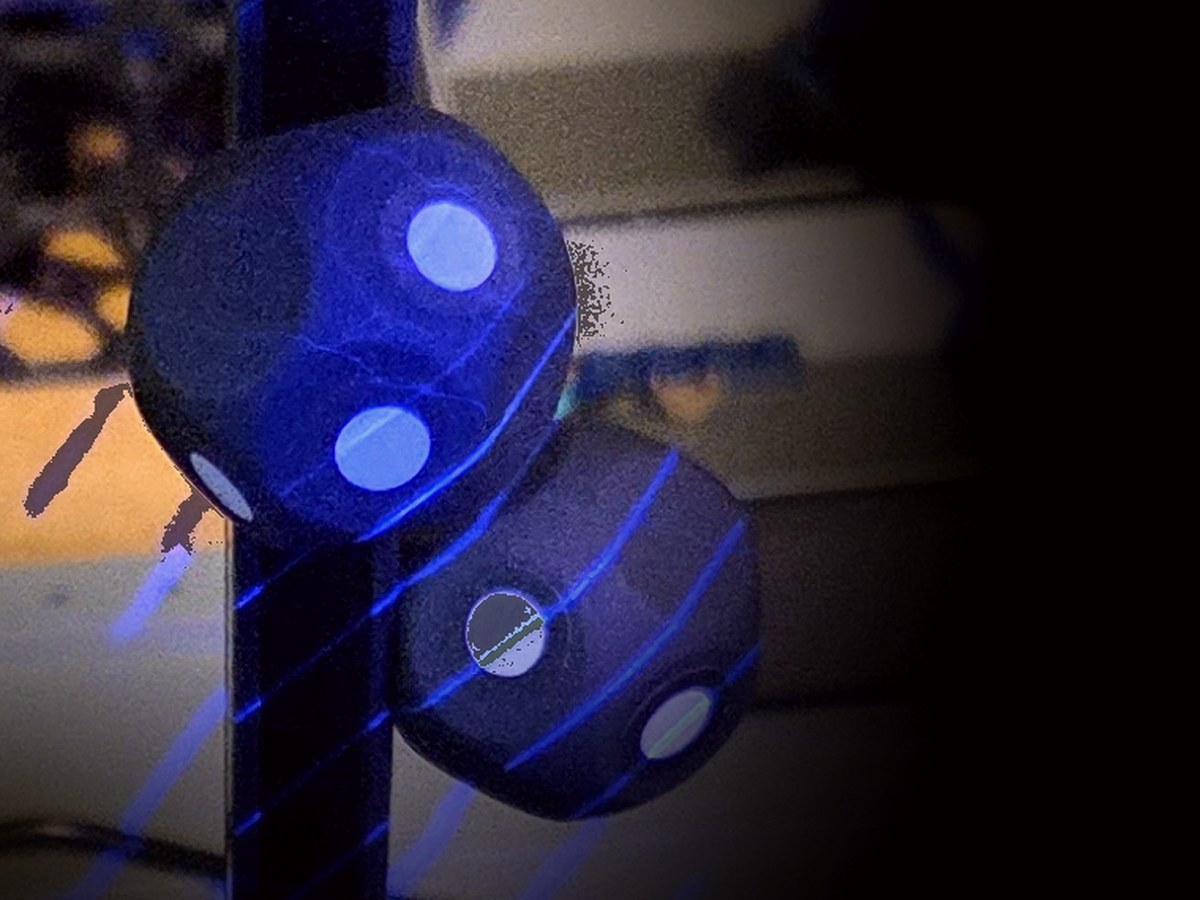
Reverse engineering produces a model. What you take away from it is your call: finished parts, the model itself, a dimensioned drawing, or all three. Plenty of jobs stop before anything gets printed.
Finished parts
We produce the replacement in engineering thermoplastic. First article is checked against the original and against the model before the rest of the run goes.
- Lead time
- 7–21 days
- Run size
- 1 to 500 units
- Tolerance
- ±0.008″ (0.2 mm)
The CAD model
An editable parametric solid, not a shrink-wrapped mesh. Yours to modify, quote out, or hand to whoever makes it. No licensing games and no per-use fees.
- Format
- STEP, plus STL and 3MF
- Editable
- Fully parametric
- Lead time
- 5–14 days
A dimensioned drawing
A printable PDF drawing with the critical dimensions, tolerances, material and finish called out. What you send to a machine shop or a molder, or file so the part is documented for good.
- Format
- PDF, printable to scale
- Includes
- Critical dims and tolerances
- Good for
- Quoting out, records, QMS
The metal case. If the honest answer is that your part needs to be machined rather than printed, the work up to that point still stands. You leave with a model and a drawing a machine shop can quote from directly, which is usually the expensive part of that problem anyway.
The jobs worth doing this way.
Reverse engineering earns its cost when the part is unavailable, the wait is expensive, or the original was never documented. These are the situations where it consistently pencils out.
Obsolete parts on production equipment
Highest valueA guard, guide, chute, bushing, knob, cover or change part on a machine that still earns money, from a builder who is out of business or quoting a lead time measured in months. The part is often simple. The problem is that nobody sells it.
Why it paysAn hour of stopped line costs more than the part, usually by a wide margin. Speed is the product, and a $12 component holding up $40,000 of equipment is the easiest business case in manufacturing.
Legacy product support with no CAD
RecurringYou still support an installed base of equipment you built ten or twenty years ago, and the drawings are on paper, on a dead server, or gone. We digitize the surviving parts and hand back a documented model library you can produce from indefinitely.
Why it paysIt converts a service liability into a stocked item, and it is repeat work rather than a one-off. One good part becomes an ongoing relationship.
Motorsports and performance
CharlotteScan an OEM duct, bracket, housing or panel, then modify it: reroute it, lighten it, add a sensor boss, fit it to a chassis it was never meant for. Ducting, intake trunking, gauge and dash panels, sensor and camera mounts, cooling components.
Why it paysThe Charlotte area has more of this work per square mile than anywhere in the country, iteration cycles are short, and the parametric model means version two is a Tuesday, not a restart.
Scan-to-CAD delivery, no parts
Model onlyYou have your own machine shop, molder or tooling engineer and what you actually need is a clean, editable STEP file of a physical object. We scan it, rebuild it properly, and hand over the model. What you do downstream is your business.
Why it paysIt removes the "can he actually make it?" question entirely and opens the door to customers who would never send out the manufacturing. Lowest-friction way to work with a shop that already has capacity.
Shop-made masters and modified prototypes
DesignSomebody built the right part by hand: carved, welded, filed to fit, marked up with a Sharpie over three iterations. It works, it exists once, and it lives in a drawer. We turn it into a production-ready model that matches what was actually built.
Why it paysThe engineering has already been done, it just was not written down. This is the cheapest possible path from "one that works" to "a hundred that work".
Discontinued trim, guards and interface parts
Low riskKnobs, handles, levers, covers, brackets, louvers, mounting feet, battery doors. Non-structural components on equipment that is otherwise fine, where the failure is a broken tab and the OEM answer is "buy a new unit".
Why it paysLow technical risk, fast turnaround, high success rate, and the kind of job that generates referrals because the customer had already been told it was impossible.
What this will and will not do.
Published up front so you do not spend a week finding out. If your part is in the bottom half of this table, that is a two-minute phone call, not a wasted RFQ.
| Situation | Fit | What happens |
|---|---|---|
| Polymer parts under light to moderate load | Good fit | Scanned, rebuilt, produced in PA-CF, PET-CF, PC-Blend, ASA, PETG or TPU. Often stronger than the original. |
| Metal parts that are not carrying real load | Good fit | Guards, covers, spacers, brackets and guides frequently convert to reinforced plastic with no loss of function and a weight saving. |
| Parts larger than 350 × 320 × 325 mm | Conditional | Scanned at full size, then either split into joined sections or delivered as a model only for you to produce elsewhere. |
| Glossy, black or transparent surfaces | Conditional | Needs a light removable scanning spray before capture. Flagged at quote time, never discovered afterwards. |
| Closed internal cavities and blind passages | Limited | No scanner sees through material. Internal geometry comes from measurement, a section cut on a sacrificial part, or your existing drawing. |
| Structural die-cast, steel or drivetrain components | Not a fit | You get told no, and pointed to a machine shop. A printed gear in a loaded drivetrain is a warranty claim waiting to happen. |
| Sealing faces, sustained heat above roughly 150°C, certified food contact | Not a fit | Wrong process for the requirement. Said plainly rather than quoted optimistically. |
| Certified material traceability | Not currently | Material lots and process parameters are documented on production runs, but Clarke Additive is not a certified source today. If your spec requires one, you need a different supplier. |
| Scanning at your facility | Not offered | All capture is done in-house in Waxhaw, NC. The part comes to us; we do not bring the scanner to you at this time. |
| Parts still in production from the OEM | Buy the part | If you can order it, order it. Reverse engineering a part you can still purchase is almost never worth what it costs. |
There is also a legal line worth stating: we reverse-engineer parts for repair, maintenance and continued operation of equipment you own. We do not reproduce parts that are currently patented, trademarked or in active production by their manufacturer, and we do not copy someone else’s product for resale.

What to send.
You do not need a CAD file, a drawing, or a part number. A broken part and a description of what it did is a complete starting point. What you do need to do is get the part to us, since all scanning happens here. The more of the list below you have, the faster the quote.
- The part itself, shipped to Waxhaw or handed off locally. Include every piece if it broke into several. Broken is fine. Worn is fine.
- What it does and what it mates to. A photo of it installed is worth a paragraph of description.
- Which dimensions are critical. If you already know the bore has to be 12.7 mm, say so.
- Operating environment: temperature, sunlight, chemicals, load, whether it moves.
- Quantity and timing. One now, or one now and twenty in six months?
- Anything you already have: a photo, a hand sketch, a part number, an old drawing.
Lead time and cost. Reverse-engineering jobs typically run 7 to 21 days, longer than a standard print because of the measurement and modelling work. There is a $500 minimum on engineering-design jobs. Every part is quoted individually, within one business day, with the modelling and the parts priced separately so you can see what you are paying for.
Send us the part.
Attach photos or the part number to the quote form, or just call. You will get a straight answer about whether this is worth doing, within one business day, before anything is committed.